Also See: Table of Contents, Excerpt, Endorsements, and Purchase Information.

Of Ditches and Pond, E-Book, Cover

william

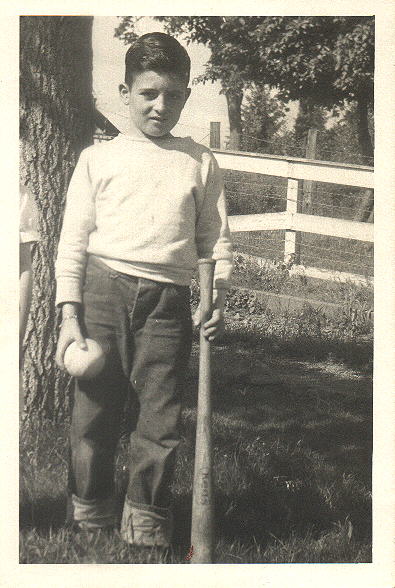
       In memory of Billy Savage, who not only lived by the best ditch in the world and shared it with me when we were children but also started me on a journey to maturity beyond fear.


TABLE OF CONTENTS

PREFACE
PART I—THE SECRETS OF MY DITCH
CHAPTER 1: A PLACE FOR ALL SEASONS
Seeing A Ditch
Billy
The Ditch and Me

CHAPTER 2: SPRING, THE SEASON OF GENTLE DAYS AND SOFT NIGHTS
Of Little Boys and Frogs
A Galaxy of Frog's Eggs
SNAKE! SNAKE!
A Sparrow Named Melody
The Owls' Time
Redwing's Family
Barn Swallow's Obstacle Course
Killdeer's Camouflage Lesson
Robin's-egg Blue
Mr. Brewer's blackbird
To see a Mole
Whose Burrows are These?

CHAPTER 3: SUMMER, THE SEASON OF BLUE SKIES AND BUTTERFLIES
With the Snap of a Tiger's Head
The Cross-Eyed Planarian
The Gray-Diggers' Triangle
Of Dragons and Damsels
Water Skipper's Secret

CHAPTER 4: AUTUMN, THE SEASON OF FLOATING SPIDER WEBS AND FALLING LEAVES
Towhee's Autumn Visit
The Coon Tree
Soil Erosion in Our Ditch
The Odor in the Night
Strange Droppings
The Trough's Mysterious Depths
Fishing

CHAPTER 5: WINTER, THE SEASON OF SLEEPING TREES AND RAIN
Winter Flood
When the Magic Went Out of the Ditch
Epilog To My Childhood
Transition

PART II—THE REFLECTIONS OF MY POND
CHAPTER 6: CREATING THE POND
The Pond is Born
Soil is Humanity's Stage
The Temporal and Spatial Dimensions of Unity
Filling the Pond
Adding the Fish

CHAPTER 7: LIFE OF THE POND
Getting to Know the Fish
The Passage of Seasons
Spring
Summer
Autumn
Winter

CHAPTER 8: REFLECTIONS
Language, Ideas, and the Freedom of Speech
The Gift of Language
From Whence Ideas?
What Does Freedom of Speech Mean?
The Relativity of Knowledge
The Sacred Land of Ignorance
Two Age-Old Questions
Who Am I?
What Is the Purpose of Life?
Two Masters
Love and fear
The Window of Perception
Life is God's Casino
On Being Right
Ownership
Cycles and Eternity
By a Feather's Weight
The Net of Equality
True Giving
Receiving is the Other Half of Giving
When is a Gift Really a Trade?
A Circumstantial Gift
Beauty and Scale
The Miracle of Insects
Expectations, Hope, and Acceptance
In Search of the Idyllic Isle
Contentment
Choosing Peace

CHAPTER 9: DEMISE OF THE POND
Nature's Masked Raiders
When the Waterfall Lost Its Voice
Mysterious Disappearance
The Dying Pond
From Pond to Flower Bed
Death of a World
Constructing the Flower Bed  (Purchase Information)


Excerpt:

OF DITCHES AND PONDS:
A Journey Through the Metaphors of Childhood and Maturity

by

Chris Maser


PREFACE

I have found, in my sixty-five-plus years, that we humans are engaged in a perpetual practicum saturated with "pop quizzes," or, if you prefer, unexpected tests, each of which deals with a necessary aspect of our lives. For those of you who are not familiar with the term "practicum," it is usually thought of as part of a college course that consists of practical work in a particular field. In this case, the course is Life and the particular field is "Living."

I have also found, as I look back over my life, that it has been choreographed by an inner compulsion, of which Mahatma Gandhi said, "The only tyrant I accept in this world is the 'still small voice' within." What the "still small voice" or inner voice is, I don't know, although some people might call it intuition. Nevertheless, it has guided the decisions in the practicum of my life ever since I can remember. When I say it has guided the decisions in my life, I must admit that, in my youth, I did not always listen to it—and I reaped the consequences of turning a deaf ear or a blind eye to the spiritual path along which my inner voice attempted to guide me. It is as though we are made blind to the future that we may learn to trust.

What, you might ask, are the consequences of straying from the spiritual path? The consequences manifest themselves as the circumstances in life—the "pop quizzes" or unexpected tests—that confront each of us with compelling choices to be made. Like every quiz, there are correct and incorrect answers. In the case of life's quizzes, however, we do not get a plus or a minus on a material scorecard as a way of indicating that we either passed or failed. Instead, we know we passed when the circumstance goes away never again to return; conversely, we know we failed when the circumstance reappears, often in another guise, which it will continue to do until we respond in such a way that we earn a passing score.

This said, I find that we each have in our lives a few pivotal events that come to the fore as a series of interrelated circumstances. When such an event and its orchestration of circumstances take place in the youth of our lives, it not only informs us and molds us but also helps establish the direction we ultimately take in our Earthly pilgrimage. For me as a child, it was not so much a single, pivotal event that helped to structure my life as much as it was a place in which to feel safe. That place was a humble, roadside ditch.

If you were to ask me why I have written an entire book based on childhood experiences centered around a roadside ditch and adult experiences centered around a garden pond, I would answer that I have found in both the wonders of the Universe. And it is the gift of wonder—the endowment of everyday life—that I would share with you. As Mother Theresa said: "Life is a promise. Fulfill it."


PART I, THE SECRETS OF MY DITCH

     Scientists have discovered that the small, brave act of cooperating with another person, of choosing trust over cynicism, generosity over selfishness, makes the brain light up with quiet joy.

New York Times reporter Natalie Angier


CHAPTER 1—A PLACE FOR ALL SEASONS

The first ditch was probably an idle scratch in the surface of the ground made by some child playing in a puddle of water after a rain or perhaps along a stream on some faraway afternoon in the dim past of humanity. The child had no grand scheme in mind while digging the little trench that allowed water to flow where it was to where it would not otherwise have gone. It was a simple, innocent act with no outcome intended, but once the outcome became clear, the next little ditch had a purpose—to see if water would behave the same a second time, and then a third, and then to see how far water would follow a ditch, and so on. With each experiment, the inquisitive, beginner's mind of the child enriched the child's knowledge of cause and effect and thereby gave the child a sense of control over water within the bounds of specific circumstances, circumstances that would be continually tested to find their limitations.

Somewhere in time a man or a woman had a budding idea and then the conscious thought of leading water from one place to another for a specific purpose—a purpose beyond play and mere curiosity. That one thought, that one experiment in the control of water for a specific, practical end, forever changed the world and humanity's relationship to it. With the first purposeful ditch, water became a commodity that could be owned, as well as moved from place to place, stored, bought and sold, stolen, and fought over, thus leading to the concept of water rights: who had the first "right" to get the available water, how much, when, where, and for how long. With control of water, land became more and more valuable to individuals, family groups, communities, and ultimately to the nations of the world.

As the first ditch became the many ditches, it allowed humanity and plants and animals to live in places that had previously been uninhabitable by those who needed water in close proximity. It helped give rise to agriculture and eventually led to such feats of engineering as the Suez and Panama Canals, each of which physically connects one ocean with another. The first ditch irrevocably altered humanity's view of itself, its sense of society, and its ability to manipulate Nature.

And that first ditch, the precursor to the ditch of my childhood, connects me with all children who have ever stopped to examine, create, or play in a ditch even to the child who made the first ditch by scratching the surface of the ground, thereby leading a trickle of water from one place to another. And I suspect that as long as there are children and ditches, the lure of the ditch will prevail, even with "grown-up" children, like myself.

Seeing A Ditch

My ditch was a place of innocence and wonder; a place of mystery and of boyhood imaginings; a place to touch the Earth, the water, and the sky. It was a place where the green arms of cattails; sedges; and rushes; and the tall, swaying grasses enfolded me, hid me, and bade me stay while I learned the songs of the seasons.

It was a place where the water spoke quietly of the harmonious cycles of life, where grasshoppers and crickets trilled, and gray-tailed "meadow mice" scurried along their secret runways. It was a place where wandering breezes carried the perfumes of flowers and the melodies of birds, where gaily colored butterflies dotted magical afternoons. It was a place brimming with life, a place where the harmonious cycles of the sun, moon, and stars guided a constant becoming as life flowed through death into life and the seasons melted one into another. And it was the place where I learned about friendship.

But most of all, it was the place where I first began to understand that the smallest piece of anything was still a part of the whole and that to understand the whole, I must value the pieces. I not only began to see the eternal flow between the pieces and the whole but also I began the long, slow process of being born unto myself in the greater context of the Universe as one of Nature's pieces reflected in the spiritual and ecological perfection of that infinitesimal spot on Earth that my friend, Billy, and I called "our ditch."

It was here between the ages of six and twelve, that I was simply open to the mysteries of the Universe, and they were revealed to me in all their splendor. Here, within the banks of a humble, roadside ditch, I saw the crowning jewel of the Universe unfold. I saw life and death and change. I saw Creation, and I found God.

Then, as I got older, I saw a ditch as habitat for small creatures wild and free and as a mural for Nature's seasons, and I still didn't care whether the water was coming from or going to somewhere or why.

Today, I see a ditch in terms of its evolution, be it natural, intellectual, or spiritual, for a ditch is all of these to me. A ditch starts out as a raw, naked wound, a furrow in the skin of the Earth, for whatever reason it has been dug. Then Nature takes over, molding and sculpting the furrow with erosion, using wind and water, and ice as Her implements. Slowly the gapping furrow begins to round and crinkle as flowing water moves jousting grain and shifting pebble here and there. Little by little the ditch bottom loses all sign of human tool, and the once-raw wound becomes a labyrinth of nooks and crannies, each with a pair of eyes silently watching the world.

As the ditch's bottom transforms, Nature plants seeds along its banks, creating a backdrop of swaying grasses and brightly colored flowers, of protecting shrubs and stately trees. On this stage unfolds Nature's play, enacted with the animals that live along the ditch, burrow in its banks, and visit with the seasons, wherein each adds a touch of creativity to the overall effect. Crickets lead the orchestra, with birds as minstrels and butterflies as the chorus line. Add two little boys, and magically you have a portrait of the ditch that was to be such an integral, formative part of my childhood.

Intellectually, I have grown from seeing a ditch solely as my childhood playground at a child's-eye level to seeing a ditch in relation to its surroundings and its function from an adult's-eye view. How I view a ditch depends on both how tall I am and how old I am. As a child, for example, I could sit or kneel in some parts of my childhood ditch and not be seen by someone on the outside; today, at six feet one inch in height, I can no longer do that. Further, when I was a little boy, I felt protected by the ditch, but now, as an adult, I would not feel such protection.

Finally, much of the world's literature portrays life as a journey along a path, but to me, following a path without the splendor of a mature ditch to keep it company is a far lonelier journey than it needs to be. I shall therefore rectify this omission by describing for you the oft-hidden beauty of a ditch as I have seen it, because a path is just a path without a ditch somewhere along its length to add that inspired dimension unsurpassed by all of the artistic endeavors of humanity.

I cannot, however, truly tell you the story of my childhood ditch without adding vignettes of a few of the characters that inhabited its banks, swam in the nearby watering trough, or lived along the creek that accepted the waters of the ditch on their way to the sea. I have chosen with care these vignettes because each still reaches through time and memory into my heart. Each is also part of a friendship shared by two little boys in the wonderful world of Nature that was at once their classroom and their playground.


PART II, THE REFLECTIONS OF MY POND

There is nothing like returning to a place that remains unchanged to find the ways in which you yourself have altered.

South African president Nelson Mandela, speaking of the cell in which he spent 27 years of his life as a political prisoner.


CHAPTER 7—LIFE OF THE POND

An invisible red thread connects those who are destined to meet regardless of time, place, or circumstance. The red thread may stretch or tangle, but will never break.

Chinese proverb

Life in the pond began slowly, as most beginnings do. The water skippers, water boatman, and backswimmers added themselves from above. The ironic thing was that all three bugs were predators and had nothing to eat in the pond's sterile waters. That seemed a minor detail, however, and did not deter them.

Next came water-walking spiders that weighed so little they could easily navigate the pond's surface. Although they, too, were predators, they could sojourn on land as easily as they could water, and thus find food beyond the pond's edge. And then came the aquatic beetles dropping out of the sky, which, like the others, could find nothing in the pond to eat.

Nevertheless, the skippers graced the surface with their little, round, shadowy dimples as they skated to and fro on the water, accompanied now and then by an adventuresome spider. The water boatman and back swimmers plied the water below the surface, and the beetles dove to inspect the bottom, only to pop up again, encase themselves in a bubble of air and head once more for the deep.

So it was that life found the pond, one organism, one species at a time, including the algae, whose spores, drifting on currents of air, were deposited by playful breezes. Sinking to the bottom, they quickly began to grow into a green carpet that became the foundation of the pond's food web. With this gathering of varied life forms (such as craneflies and Mayflies, which eat decaying vegetation, as well as their dragonfly predators), all the functional groups that constituted an aquatic ecosystem began taking their places and choreographing the living script of the pond according to Nature's inviolate, biophysical principles of life, including, of course, the fish that we had introduced.

Getting to Know the Fish

With five of our original seven fish dead, we went back to the pet shop and got seven more. Three were orange, one black and orange, and one all black. We named the black fish "Blackie," and we named one of the original two orange fish "Neon" because she had a bright, shiny, golden spot on her back at the base of her tail, making it easy to recognize her.

At first, the fish simply explored the pond, which was bigger than anything they had ever experienced. The pond, at this early stage, was still largely devoid of plant cover, so we could easily follow their movements as the fish coalesced into what appeared to be a single organism that swam as if in a ballet.

As the aquatic plants grew, the fish became somewhat more individualistic in that some explored one area of the pond, while others examined nooks and crannies elsewhere. During this stage in the pond's development, the fish were still wary of us and swam away if we approached too closely.

We finally decided that seven fish were not enough for the size of the pond, so we made another trip to the pet shop and came home with ten more, some black and orange, others charcoal, two or three orange, and two that were white. As summer waned, a few of the fish, that could not adapt to their new home, died. These we replaced with yet another trip to the pet shop.

Although we picked fish with interesting color patterns each time we got new ones, we began to notice a change in some of them as the weeks passed. The black and orange ones were becoming solid orange, and some of the orange ones were becoming a mottled orange and white. With time, most of the mottled ones turned pure white.

Even Blackie, who we could still recognize because she and Neon were the two largest fish, began to turn orange. Over time, she became pure orange and then began to turn white. In the end, Blackie was pure white.

The fish settled into their new home as autumn arrived with its cool evenings and cricket song that gave way to crisp mornings. By then, the fish were already begging for food the moment they saw us. With mouths agape, they milled around until we fed them. This, despite the fact that algae was by now growing across the pond's liner, changing it from a smooth black surface to a fuzzy green. As the bottom became an aquatic "field" of algae, the fish started to graze it as their dietary staple, which, however, in no way distracted them from begging whenever they saw us.

Although they were initially attracted to us as a source of food, it wasn't long before they came to investigate my fingers with gentle "nibbles" whenever I worked in the water. And they loved nothing more than for me to wiggle or "prune" the aquatic plants in such a way that the organic material, which had accumulated on the bottom, was thoroughly stirred up.

Time, food, and patience gave the fish enough confidence in us and themselves that they lost whatever fear they originally had. I, in turn, had never thought I would come to love fish as individual beings as much a I loved these. Sure, Billy and I had loved fish, especially Billy, but not as individuals. On the other hand, I remember my visits to some of the Shinto shrines in Japan, where I witnessed a similar relationship between the Shinto priests and the koi that graced their ponds.

When animals, including people, learn to trust, really trust, there is no fear. This kind of trust became apparent in our fish when the neighborhood children learned of them and came over specifically to see and visit with them. The children liked nothing more than to feed them and watch them chase bits of sinking food. Although the youngest children had to be restrained lest they entered the pond to get a closer look, the older kids loved to put their hands in the water and feel the fish nibble at their fingers. Even the parents enjoyed watching the fish.

With each visit from the neighborhood children, the fish became an increasingly inseparable part of the pond as it progressed from sterile water into a thriving ecosystem that reflected the passing seasons. Weather permitting, we sat on Dad's bench and ate lunch almost every day so we could visit with the fish as they swam about in front of us. And so, the march of seasons began to guide the pond through the years.  (Purchase Information)


Endorsements:

"This deeply philosophical memoir closely examines that place in all of us where the human world intersects with the natural one. His respect and awe for all life is, in Chris Maser's case, a true measure of the man. Read this book. It's for everyone who has ever had a friend or planted a garden."—Virginia White, Writer and Teacher (former Biologist), Institute for Extended Learning, Community Colleges of Spokane, Washington.

"This marvelous book takes us on a deep journey, from the close, rapt attention of a child's eye to the long view of life on this planet. It shows us a true way to connect, through the path of inquisitiveness, to our world and our selves."—Barbara Bash, Author, calligrapher, illustrator, and teacher, Accord, NY.

"Of Ditches and Ponds is a call to remembrance, nested in the ordinary, wondrous landscape of Life. With a naturalist's eye for detail and a philosopher's gift of reason, Chris Maser maps the interconnectedness and the moral beauty of earthly forms. A journey of time and space, a memoir of self and matter, this is an inspiring read."—Doreen Valentine, Acquisitions Editor for Rutgers University Press, Piscataway, NJ; writer; and mother. (Return to Top of Page)


Purchase Information:

Of Ditches and Ponds, Mobipocket E-book format - download from the Mobipocket website.


Mobipocket E-book format - downloaded from the Mobipocket website.  E-book / Secure Mobipocket® format $9.98 - Download the e-book from the Mobipocket® website. The Mobipocket® e-book can be read on your desk-top computer or laptop computer, as well as the PalmO®, WindowsCE®, PocketPC®, Psion®, Epoc32®, and XDOC PRC formats. Download the Free Mobipocket® E-book Reader.


Copyright © Chris Maser 2006. All rights reserved