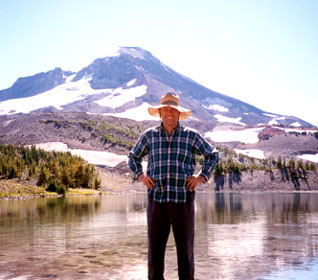
Chris Maser and Zane Maser
"Maser describes beautifully what experiencing the Owyhee country ecosystem is like for the layperson as well as the field scientist. His prose is easy to read, and his knowledgeable explanation of this wild country gives the reader a full course of the Owyhee ecosystem. This is the land where the Yellowstone hot spot first erupted under the North American Plate, and the Columbia River basalts started. This book can be used as a textbook or as a useful reference book for the serious layperson and scientist." Thomas E. Koler, PhD, Geologist\Geomorphologist (licensed geologist in Oregon), Kelsey, CA
For more information, see: The Natural History of a Canyon and Its Surrounding Sagebrush Steppe
This book is available on Amazon.
list of books
Community Vision and Leadership in Practice: A Sustainable Approach 2024. CRC Press, Boca Raton, FL. In press. Chris Maser and Holly V. Campbell
"This book adds some especially needed assets to my teaching tool box. I have used Chris's publications for years and have considered his works to be the Compass. However, I couldn't go to the next step with my students as to how to find a path to a viable, vibrant outcome within the structure of society as we know it. Holly and Chris integrate the inviolable principles with agency such that students can see how a sustainable end can be accomplished. Year after year I have seen students struggle with overpowering feelings of loss and lack of control once they truly begin to understand how natural systems work and then learn the reality of current conditions. This can shut them down and affect their ability to fully integrate what they have learned, their desire to learn more, and then act on it. I also think the questions at the end of the chapters are useful for topic review and because they are introspective, they encourage meaningful class discussions. I can see furthering the framework of this book as time passes with more exemplary outcomes and student input. Glad to have a book like this structured for student learning!" Cindy Haws, Assistant Professor of Science,
Umpqua Community College, Roseburg, Oregon.
For more information, see: Community Vision and Leadership in Practice: A Sustainable Approach
This book is available on Amazon.
list of books
Resolving Water Conflicts Workbook 2021. CRC Press, Boca Raton, FL. 418 pp. Lynette de Silva and Chris Maser (Editors)
"This helpful workbook teases out some of the deep complexities of water conflicts through rich, wide-ranging, international case studies. Anchored by 'four stages of water conflict transformation,' the authors offer us a useful framework to expand our thinking about and responses to water conflicts. The holistic focus on relationships, culture, governance, and sustainability makes this an especially useful book for practical application as well as academic study." Dr. Scott Jones,
Co-Director, Mind the Gap Research & Training, Scotland;
Associate Professor of Peace and Conflict Studies, Bjørknes University College, Oslo
For more information, see: Resolving Water Conflicts Workbook.
This book is available on Amazon.
list of books
Sustainability and the Rights of Nature: In Practice. 2019. CRC Press, Boca Raton, FL. 418 pp. Cameron La Follette and Chris Maser (Editors)
This book has been selected for the 2021 "Choice Outstanding Award."
For more information, see: Sustainability and the Rights of Nature: In Practice.
This book is available on Amazon.
list of books
The Marys River of My Youth:
A Natural History of Its Seen And Unseen Life. 2019. Luminare Press, Eugene, OR. 514 pp.
"I worked as a forest wildlife biologist for the U.S. Forest Service and also in other fields in natural resources (fire, range management, forestry, and engineering) for agencies and conservation organizations over the past 30-plus years. I have learned so much from Chris Maser's works and they have guided my efforts and understanding over the years. His way of connecting and communicating key ecological concepts has been far ahead of the curve. He is a true leader and a great mentor.
"As an admirer, it is such a joy and special gift to get to experience his youth with him in this book and learn wonderful things about species' natural history that I have never taken the time to get to know in such depth. His stories describe how he connected and maintained an amazing relationship with the natural world as a kid and the precious gifts it gave to bravely walk a very difficult, but vital, path for rest of his life. It is incredible the depth and breadth of what Chris observed and learned. Seeing how he put himself so fully in it and the joy of what he got to see and experience from it was like experiencing it myself every bit of the way. It even made me feel like a kid again getting to know the natural world with him. It is a wonderful example of how the natural world touches us and gives us the substance we need to become great people. 'Now, come with me into yesteryear and rest peacefully for a while along the banks of the Marys River of my youth.' This book is relaxing and fun, like reoccurring walks in nature with a marvelous naturalist friend." Cindy Haws,
Myrtle Creek, Oregon
For more information, see: The Marys River of My Youth:
A Natural History of Its Seen And Unseen Life.
This book is available on Amazon.
list of books
Resolving Environmental Conflicts: Principles and Concepts. Third Edition. 2019. CRC Press, Boca Raton, FL. 234 pp. (Chris Maser and Lynette de Silva)
"Perhaps because of their vast experience, both starting as scientists, then evolving to roles as mediators/teachers/trainers/researchers, their contribution with this work is not to advocate for any particular school of thought, but rather for the value in all sides of each complex setting, to be appreciated rather like the facets of a diamond.
"Maser and de Silva weave together a number of important strands—environmental sustainability, resource conflict management, and the art of teaching—any of which could be a book by itself. Their contribution is not only in each of the topics—each of which is handled thoughtfully and with nuance—but more so in the linkages between each strand, which seems to be where they find the sizzle." Aaron T. Wolf, Professor of Geography, Oregon State University, Corvallis, Oregon.
For more information, see: Resolving Environmental Conflicts: Principles and Concepts. Third Edition.
This book is available on Amazon.
list of books
Sustainability and the Rights of Nature: An Introduction. 2017. CRC Press, Boca Raton, FL. 418 pp. (Cameron La Follette and Chris Maser)
"With a great sense of relief and hope, I endorse SUSTAINABILITY AND THE RIGHTS OF NATURE: AN INTRODUCTION. Esteemed authors Cameron La Follette and Chris Maser have gifted the world with a roadmap for ecological and social resilience based on a thorough understanding of ecology and ethics favoring the common good. The often-detailed concepts of environmental science are accessible to a broad readership, and the legal contexts are clearly presented. I also see it as an excellent textbook for college students, for all branches of science—environmental, ecological, historical, political, physical, sociological, technical, and engineering—and for economics, arts, and humanities. The book touches down into details about places around the world, which exemplify both grave predicaments and attainable solutions for the pathway forward. The losses of habitat and ecosystem integrity are staggering, yet there is hope for protecting what remains. By following the 'blueprint' outlined in this book, we can find ways to 'retool' by instituting laws, policies, and practices based on 'The Rights of Nature.'
"In following the work of Chris Maser since the late 1980's, I see that he is continuing to produce timely publications of crucial information needed by organizations, institutions, and communities facing choices between natural resource sustainability and the path of further destruction of the planet's life-support systems. This new book provides ecological, historical, legal, and contextual information about the wide range of seemingly insurmountable challenges we face around the planet. Thankfully, along with in-depth analyses of the problems and causes, the recommended solutions seem attainable. The lists of specific recommendations for management, restoration, research, and governance, all emphasize justice. Indeed 'The Rights of Nature,' as an overarching framework for choice-making at all levels of governance, from personal to global, is a greatly needed manifesto." Judith Ann Wait, Ph.D. Candidate, School of the Environment, Washington State University, Vancouver.
For more information, see: Sustainability and the Rights of Nature: An Introduction
This book is available on Amazon.
list of books
The Natural History of a Mountain Meadow and Its Cirque. 2015. Luminare Press, Eugene, OR. 425 pp.
"Amidst the vivid imagery and intimate detail of a place virtually untouched by man lies an elegant allegorical expression of the human condition, not only through the trials of young Storm Hawk, but also the complex system of living beings inhabiting the meadow and its cirque. Glimmering in the eyes of every member of the ecosystem is a spark of humanity that will bring readers closer to the wildlife than a documentarian could ever imagine. The youth's journey to adulthood is portrayed again and again through the lifecycles of the numerous meadow dwellers, varying with each account by the creature's specific background, status, and fortune.
"Chris Maser's expertly crafted book presents a 'coming-of-age' and 'finding-your-niche' narrative alongside an information-rich guidebook befitting top-tier adventurers, sportsmen, and wildlife enthusiasts. Each page is radiant with his tremendous passion for the outdoors, and I have no doubt that anyone enjoying this marvelous book will be struck with the overwhelming urge to go camping—as I was, and ultimately did—if only to re-experience nature through a newly developed lens. Truly, this work is a gift to the reader." Martin Now, Corvallis, OR.
For more information, see: The Natural History of a Mountain Meadow and Its Cirque
This book is available on Amazon.
list of books
Interactions of Land, Ocean and Humans: A Global Perspective. 2014. CRC Press, Boca Raton, FL. 308 pp.
"It's been a very rewarding experience reviewing Chris's book, far more fun and educational than I ever anticipated. Through his work as a scientist and his personal experience, Chris takes the reader on a journey around the world to explain, understand and appreciate the scientific, economic and emotional linkages between the land, oceans and people. He reminds us that our actions today are the choices that will determine the environmental legacy we leave for future generations. Also, that if the human species is to exist we must do no harm to the very commons that support us at all levels of life. And, in conclusion, how we educate our youth will provide the foundation of hope needed to show the world that we must change our way of thinking if we are to save us from ourselves."—Rollin R. Geppert. Founder, Ecosystems Scholarship Fund, Olympia, WA.
For more information, see: Interactions of Land, Ocean and Humans: A Global Perspective
This book is available on Amazon.
list of books
Land-Use Planning for Sustainable Development, Second Edition. 2014. CRC Press, Boca Raton, FL. 296 pp. (Jane Silberstein and Chris Maser.)
"A comprehensive and visionary approach to land-use planning that grounds the unfolding of human communities and economies within an underlying matrix of living systems. This book should help reinvigorate the planning profession at a time of unprecedented change, complexity, and need for resilience."—Stuart Cowan, Ph.D. (Co-Author, Ecological Design), Bainbridge Graduate Institute, Portland, OR.
For more information, see: Land-Use Planning for Sustainable Development, Second Edition
This book is available on Amazon.
list of books
Life, the Wonder of It All. 2013. Global Forest Society, Banff, Alberta, Canada. 370 pp. (Chris Maser and Reese Halter.)
"The overall concept—tracing life's myriad interconnections from the big bang to the Earth's present sorry state—is wonderful! You have given us many moments of beauty: your wondrous ditch; the miracle of dragonflies; the notion of conduit; the fall of snowflakes. For me, the narrative itself is at its best when it focuses on these specifics. Of course, you need the larger concepts to hold it all together, but it is these small and individual moments I look forward to as a reader.
"By the time you get to Nature's Commons, and introduce the concept of living trust, I realize how carefully you have laid out the steps of the journey. I think you have prepared us well for the emperor's wise gardener and the notion that each of us internalizes the wonder you have described.
"Thank you for giving me the opportunity to read and comment. I believe this will be a volume many of us will treasure: read, pass on but insist on getting it back for a second and third read."—Jane Braxton Little (Freelance Journalist Focusing on the Natural Environment), Plumas County, California.
For more information, see: Life, the Wonder of It All
This book is available on Amazon.
list of books
Decision Making for a Sustainable Environment: A Systemic Approach. 2013. CRC Press, Boca Raton, FL. 304 pp.(Chris Maser, with a chapter by Jessica K. La Porte.)
"We find ourselves looking for a path to the future. Economic uncertainties and structural failures as well as imminent eco-catastrophes cloud our vision. Our community has watched its logging identity collapse, leaving a void in nearly every area of life except our hope. In his newest work, Chris Maser has captured the fear, the challenges, the limitations and the ever-changing flow that can move us beyond the quest for mere economic survival through tinkering with the socio-economic and ecological status quo. Maser's articulation of a 'systemic' approach can help us work together as we forge a future built on relationships, a future that honors our history, recognizes our present circumstances, and listens to our children . . . an ever-changing and sustainable future. How scary and exciting!"— Carol Lewis (Community Development Director ), City of Sweet Home, Oregon.
For more information, see: Decision Making for a Sustainable Environment: A Systemic Approach
This book is available on Amazon.
list of books
Resolving Environmental Conflicts, Second Edition. 2012. CRC Press, Boca Raton, FL. 241 pp. (Chris Maser and Carol Pollio.)
"Even when faced by compelling need to act in order to support the health of our planet, and simultaneously in support of our human communities and economic wellbeing, we are paralyzed by intractable environmental disputes. Only the human species saddles itself with high-conflict, low-cooperation, and maladaptive strategies and behaviors, perhaps because the stakes are so high in that our survival as a species, and that of so many other species, is at stake.
"Seasoned veterans Chris Maser and Carol Pollio take us on a visit to our planet's 21st Century frontier — effective resolution of environmental conflicts. They make a clear case for our adaptive social evolution: Transform ourselves and live. Fail to transform ourselves and die.
"In well-written, unequivocal language, they map a way forward — a pattern of thought, ethic, word, relationship mending, and action — that can only help us save our planet and, thereby, ourselves.
"I found two chapters especially noteworthy. The first, 'Social Principles of Engagement in a Sustainable Society', proposes change in thought and values that, if we internalize them, can only help us reframe our behaviors and actions and propel us towards sustainable relationships with people and nature.
The second is 'Conflict Is a Learning Partnership.' Here the authors thoroughly develop the reader's understanding of the mediator's role as an actor in the healing service to others. Too often we experience mediators wedded to urgency and process, or acting with bias for a particular outcome or participant. Maser and Pollio correctly cast the mediator's role as a fundamentally spiritual one: first as facilitator of healed relationships, then as nurturer and keeper of positive outcomes created by others.
"If you want to save the planet, read this gracefully written book."—James A. Caplan, Roseburg, Oregon.
For more information, see: Resolving Environmental Conflicts, Second Edition
This book is available on Amazon.
list of books
Economics And Ecology: United for a Sustainable World. 2011. CRC Press, Boca Raton, FL. 191 pp. (Russ Beaton and Chris Maser.)
"Nature and people are being brutally lambasted all over the planet. Recent torrential rains forced the evacuation of 400,000 Japanese citizens, and the severity of the U.S. drought, which has not only laid waste to millions of bushels of corn and soybean, it's now threatening water flow of the mighty Mississippi River.
"The worldwide economy is a wholly owned subsidiary of the environment.
"Russ Beaton and Chris Maser have produced a powerful new book entitled Economics & Ecology: United for a Sustainable World, which I believe should be required reading for all college freshmen. It is a blueprint to ensure that our species thrives in the 22nd century.
"Beaton an economist and Maser an ecologist draw upon over 9 decades of global experience and wisdom to present a detailed plan reuniting economics and ecology; it's well-explained and rich with examples.
"The natural world is upside down. It is very apparent that the days of pitting the economy versus the environment are numbered. The Greek root of each word oikos means house. Ecology is the knowledge of understanding the house whilst economics is the knowledge of managing the house.
"Our natural environment and the resource base for the world economy are inexorably linked. Therefore these two crucial parts must come together for the house to remain standing, as our species is now heading toward 8 billion by 2025.
"Beaton and Maser provide a systemic examination of the living world, and a necessary economic roadmap towards a sustainable future for the human race."—Dr. Reese Halter, Huffinton Post.
For more information, see: Economics And Ecology
This book is available on Amazon.
list of books
Sustainable Development: Principles, Frameworks, And Case Studies. 2010. CRC Press, Boca Raton, FL. 216 pp. ( Okechukwu Ukaga, Chris Maser, and Michael Reichenbach.)
For more information, see: Sustainable Development
This book is available on Amazon.
list of books
Social-Environmental Planning: The Design Interface Between Everyforest and Everycity. 2009. CRC Press, Boca Raton, FL. 321 pp.
"I believe the book provides an important and unique perspective on the strong relationships and parallels between human-made systems and structures and other natural systems and structures. The convergence of the social and physical sciences; of science and spirituality; of art and science and of other previously isolated fields of endeavor and belief will be, I believe, the hallmark of this century. Chris's book elegantly weaves together two such realms of thought and understanding. I have been an urban planner since 1971 and have read many books relative to planning and development. I have not yet read a book or article, which provides this much-needed framework for planners, public officials engaged in community development, and systems thinkers. I believe this book will make a significant contribution to the existing conceptual frameworks used by urban, regional, and natural resource/environmental planners while laying the groundwork for an emerging multi-dimensional, multi-disciplinary, highly integrative thought system."—Jane Silberstein, Bainbridge Island, Washington.
For more information, see: Social-Environmental Planning
This book is available on Amazon.
list of books
Earth In Our Care: Ecology, Economy, and Sustainability. 2009. Rutgers University Press, New Brunswick, NJ. 262 pp.
"Chris Maser is a supreme storyteller, and Earth in Our Care: Ecology, Economy, and Sustainability is a compelling account highlighting the importance of understanding functional ecosystems in the 21st century. Using vivid examples of Nature's blueprint, Maser clearly shows that the integrity of terrestrial and aquatic ecosystems depend in their entirety upon healthy individual parts working in concert. This excellent book is a crucial addition to the burgeoning field of conservation biology and a requisite tool for all resource managers."—Reese Halter, Founder of Global Forest Science, Los Angeles, CA.
For more information, see: Earth in Our Care
This book is available on Amazon.
list of books
Trees, Truffles, and Beasts: How Forests Function. 2008. Rutgers University Press, New Brunswick, NJ. 288 pp. (Chris Maser, Andrew W. Claridge, and James M. Trappe.)
"Accurate and authentic, Trees, Truffles, and Beasts: How Forests Function makes a major contribution to the field of natural resource management. This is a clear and compelling argument that there's much more to forests than meets the eye."—Jim Furnish, Deputy Chief for National Forest System (ret.), USDA Forest Service.
For more information, see: Trees, Truffles, and Beasts
This book is available on Amazon.
list of books
Teaching Kids to Change The World: Lessons to Inspire Social Responsibility for Grades 6 - 12. 2008. Search Institute, Minneapolis, MN. 102 pp. (Jennifer Griffin-Wiesner and Chris Maser).
Through a series of modules, thisresource offers educators and youth-group leaders a means of inspiring social consciousness and action among youth and teaches young people how to think, rather than what to think. Without money, power, or the right to vote, how do children and teenagers find a voice in society? How can educators and leaders talk meaningfully with students about such broad concepts? Avoiding partisan politics and moral debates, this resource equips educators with philosophical discussion questions, concrete illustrations, and active examples. Each component sets forth a theme or principle about change; a classroom experiment or activity that illustrates the theme; and an example of a social action or service project in which young people can participate to help create the change they wish to see, showing youth their role in the societal and environmental changes that occur across decades or even centuries.
For more information, see: Teaching Kids to Change The World
This book is available on Amazon.
list of books
Our Forest Legacy: Today's Decisions, Tomorrow's Consequences. 2005. Maisonneuve Press, Washington, D.C. 255pp.
"Maser presents a unique, possibly visionary, view of how humans interact with forests and how the author feels this interaction should change. I suspect that many readers will scoff at the ideas presented, others may find that their fundamental philosophies have been changed by reading the book. The scientific information in the book is high quality and current, although it is more aimed at a lay audience than for students or scientists who are already knowledgeable about principles of forest ecology. Forest managers, on the other hand, could be enlightened by many of the ideas and thoughts presented here.
"This thoughtful and inspirational book is as much a philosophical monograph as a scientific text, although the elements of philosophy and science are nicely blended. The book is peppered with lovely quotes from all aspects of the human experience, including politics, literature, science and art. It starts with a careful and detailed examination of its own purpose, which I would describe as the author's personal prescription for a new relationship between humans and forests—one that focuses on viewing forests (especially, but not exclusively, public lands) as a living trust, with each successive generation bearing responsibility to ensure that the integrity of the forest is maintained for future generations. The focus is on the United States, although numerous allusions and references are more global."—Dr. Barbara J. Bond, Professor, Department of Forest Science,
Oregon State University, Corvallis, Oregon.
For more information, see: Our Forest Legacy
This book is available on Amazon.
list of books
The World is in My Garden: A Journey of Consciousness. 2005. White Cloud Press, Ashland, OR. 232 pp. (Chris Maser and Zane Maser.) UK edition by Polair Publishing, London. 2003.
"In a world awash in holistic self-help books this one stands out because of Chris Maser's pedigree as a world-renowned ecologist. … The general message of this book—we must change our relationship with the rest of the world in order to survive—is the most crucial problem facing our species."—Gary McFarland, BookPeople's Book of the Day.
For more information, see: The World is in My Garden
This book is available on Amazon.
list of books
Evaluating Sustainable Development: Giving People a Voice in Their Destiny. 2004. Stylus Publishing, LLC, Sterling, VA. 192 pp. (Okechukwu Ukaga and Chris Maser)
"The authors apply the concepts and practice of evaluation to all temporal stages of program management. Their evaluation processes ask us whether we should start a project, how it's working, whether we should change its course, and whether it is accomplishing its goals and objectives. They advocate ferreting out current values and conditions as a precursor to evaluation. This provides a baseline or starting point; so people can set goals for getting to an even better place, and effectively measure their progress toward that future place. In their model, a baseline description of a community, culture and organization is preparatory step toward crafting an evaluation of community stability and sustainability.
"They show us how to take our people beyond the usual drudgery and isolation of evaluation process, using the process to facilitate decisions, demonstrate accountability, enhance relationships and support planning. They make it critical for stakeholders to play active roles in evaluation of sustainable development so the challenges, opportunities, and circumstances of their world are represented therein. This form of participatory evaluation is a precursor to participatory decision-making. The involvement of advocates in evaluation of their own programs makes them the best judges of its success.
"This book has broad application. Ukaga and Maser have grounded their recommendations in their respective practices—from Minnesota to Nigeria. It offers evaluation methods for sustainability on both global and local scales; for those addressing immediate problems of survival and development in non-industrialized countries, and for those involved in large organizations and industrialized nations."—Dr. Steven B. Daley-Laursen, Dean, College of Natural Resources, University of Idaho, Moscow, ID.
For more information, see: Evaluating Sustainable Development
This book is available on Amazon.
list of books
The Perpetual Consequences of Fear and Violence: Rethinking the Future. 2004. Maisonneuve Press, Washington, D.C. 373 pp.
"For those who have been appalled as I have been by our politician's program to end violence with war and violence, Chris Maser's book will come as a great relief. He shows how fear insidiously works its way into almost every part of our lives and in doing so corrupts our decision-making. It's fear that makes us believe violence is a solution. Our media is now obsessed with making us afraid, and we need strong, positive books like this one in order to think our way through fear toward beliefs about society and other people that lead to peaceful relations. The humane and moral response to the tragedy of September 11th is what Maser offers in his book; it's a courageous statement given the social climate that now prevails. I recommend this book as a means to productive dialogue and a way to begin to think outside the non-productive cycle of violence that defines our lives today."—Susan Sarandon, Actor/Activist.
For more information, see: Fear and Violence
This book is available on Amazon.
list of books
Ditches And Ponds: A Journey Through The Metaphors Of Childhood And Maturity. Woven Strings Publishing, Amarillo, TX. 2004.
"This deeply philosophical memoir closely examines that place in all of us where the human world intersects with the natural one. His respect and awe for all life is, in Chris Maser's case, a true measure of the man. Read this book. It's for everyone who has ever had a friend or planted a garden."—Virginia White, Writer and Teacher (former Biologist), Institute for Extended Learning, Community Colleges of Spokane, Washington.
For more information, see: Ditches And Ponds
This book is available on Amazon.
list of books
Paradoxes and Metaphors: Understanding Some of Life's Lessons. 2003. Woven Strings Publishing, Amarillo, TX. 235 pp.
"A child of nature turned scientist, Chris Maser, is a modern day transcendentalist. In his book Of Paradoxes and Metaphors: Understanding Some of Life's Lessons, he leads us in a gentle spiral of stories, experiences, and observations. Maser looks at our world through relationships personal and global. His questions for the Great Mystery spring from interactions within the human web. He nudges us to our own questions for the Universe, which will point each of us toward our own truth, and asks us to have the courage and humility to find that truth."—Linda Saurenman, Los Angeles, CA.
For more information, see: Of Paradoxes and Metaphors
This book is available on Amazon.
list of books
Forest Certification in Sustainable Development: Healing the Landscape. 2000. Lewis Publishers, Boca Raton, FL. 235 pp. (Chris Maser and Walter Smith.)
"An environmental dispute facilitator and a former logger and current certification and training consultant discuss the philosophical foundations of current forestry practices, followed by discussion of the principles and practices of sustainable forestry and how the process of certification can enhance it. Throughout, emphasis is placed on balancing ecologically sound and people-friendly forestry practices. Topics include certification and trusteeship; the history of forestry certification; how certification works; and some of the common problems encountered during the process. Attention is given to the Rainforest Alliance's SmartWood program."—© Book News, Inc., Portland, OR.
For more information, see: Forest Certification
This book is available on Amazon.
list of books
Land-Use Planning for Sustainable Development. 2000. Lewis Publishers, Boca Raton, FL. 203 pp. (Jane Silberstein and Chris Maser.)
"Silberstein and Maser have written a must-read book for anyone interested in local community-planning with a definite sustainability twist. I read it for a paper on sustainable participation and found it to be quite easy to read; plenty of case examples and thought-provoking ideas make sure of that. I especially liked reading about the everyday problems that are so common in community planning, it makes it easy to relate to."—A review from Sweden via Amazon.com
For more information, see: Land-Use Planning
This book is available on Amazon.
list of books
Ecological Diversity in Sustainable Development: The Vital and Forgotten Dimension. 1999. Lewis Publishers, Boca Raton, FL. 402 pp. Published in a Persian edition.
"Drawing on a career as a researcher in natural history and ecology, Maser expands the concept of diversity from its usual biological realm to embrace all aspects of the environment. He explains that communities must maintain natural cycles of the landscape in ways that provide enough energy to survive, explores how thoughts dictate actions, argues that a rise in consciousness must precede scientific and technological solutions, and suggests how to design a future in which culture and nature are in harmony."—© Book News, Inc., Portland, OR.
For more information, see: Ecological Diversity
This book is available on Amazon.
list of books
Reuniting Economy and Ecology in Sustainable Development. 1999. Lewis Publishers, Boca Raton, FL. 108 pp. (Russ Beaton and Chris Maser.)
"Fight against it as I might, having been trained as an economist, I view much of the world through markets and statistics. Luckily, I have had mentors in the profession who question the narrow vision of standard doctrine. This book serves such a purpose. For non-economists, this book reminds sustainable development advocates that their concepts must make economic sense; for economists, it questions perceived truths, and looks beyond traditional economics to alternative perspectives for important answers."—Christopher Meier.
For more information, see: Reuniting Econ. & Ecol
This book is available on Amazon.
list of books
Mammals of the Pacific Northwest: From the Coast to the High Cascades. 1998. Oregon State University Press, Corvallis, OR. 406 pp. Published in a Canadian edition.
"Mammals of the Pacific Northwest is as much a personal journey as it is a natural history of mammals of the region. Most vertebrate ecologists of Maser's generation grew up as kids fascinated by the animals around them; they crawled through bushes, waded in marshes, and caught everything that came within reach. Few have remained naturalists because science, even vertebrate science, has rapidly moved in the direction of rigorous hypothesis testing, experimental design, and high powered statistical analysis. There seems to be little place for naturalists in this new climate, and that is our loss.
"Few people, scientists or otherwise, have had as extensive and intensive studies and personal interactions with as many mammalian species as Maser. For that reason alone, the book is a treasure trove of fact, observation, and supposition, from the diets of bats to observations of personality differences among individual shrews. In this book, Maser presents a lifetime of observations from a distance to up-close and personal. As Maser himself says in the introduction: 'I have now spent over thirty years in a consummate love affair with science—mostly studying mammals in the wild …. I have over many years learned to know them.' Indeed he has.
"Mammals of the Pacific Northwest is not a field guide, and it doesn't pretend to be one, although most of the information found in field guides is present in this book as well. It is a taxonomically arranged natural history of these animals, interspersed with some delightfully poignant and occasionally hilarious remembrances of particular individual mammals or events, and as such is remarkably readable. Because it is written from the naturalist's perspective, this is the book that the serious student of mammals should read before going out in the field to observe, trap, or study mammals. To borrow from current vernacular, this book helps one to 'get inside' an animal's head, an ability often lacking in current generations that haven't had the luxury of many years of patient first-hand observation.
"Maser's objective was to reach a general audience, and to share his life-long love affair with Pacific Northwest mammals both by presenting his vast storehouse of life history knowledge and by telling interesting (if not endearing) stories of individual animals he has known. I think he has succeeded. Readers will get an enhanced view of what otherwise would be a series of entries in a field guide; I believe this was Maser's intent. As a professional ecologist, this would be the first source I would want to read if I wanted to learn more about a mammal I planned to study."—Bruce E. Coblentz, Department of Fisheries and Wildlife, Oregon State University, Corvallis. Northwest Science 73:140-141 (1999).
For more information, see: Mammals
This book is available on Amazon.
list of books
Vision and Leadership in Sustainable Development. 1998. Lewis Publishers, Boca Raton, FL. 235 pp.
"Chris Maser's 25 years as a social scientist made him aware of the connection between environmental degradation and human activity. 'Vision and Leadership in Sustainable Development' is the fourth book of a series about the various facets of sustainable development. The goal of the series is to help readers realize they are responsible for the planet's sustainable evolution and that they have the moral obligation and duty to preserve options for future generations. In order to do so, communities must take responsibility for their own future and determine a local shared vision of their future to serve as an organizing context to plan their actions. Defining a vision requires inner work to shift from a self-centered to an other-centered attitude, and a successful implementation requires effective leadership. The realization of local communities will ultimately lead to a global society. 'Vision and Leadership in Sustainable Development' emphasizes the importance of balancing the material and spiritual components to link environmental issues to society. The book examines leadership in an original way: it does not propose a model or a method to be an effective leader but insists on the philosophical basis of leadership.
"'Vision and Leadership in Sustainable Development' is well written and accessible to a broad audience. The book is extremely rich in ideas but it is not overwhelming. Abstractions are turned in concrete examples or explained through analogies, thus making the underlying concept clear. The book is very practical and provides concrete tools to bring diverse people together to find new solutions and inspire other people to join them in the process. The author uses his experience as a consultant to give examples of questions to ask or indications as how to deal with children to understand their own values, but he also gives tips on the emotional implications of being a leader and how to overcome some difficulties."—Aurélie Brunie, Penn State.
For more information, see: Vision and Leadership
This book is available on Amazon.
list of books
Setting The Stage For Sustainability: A Citizen's Handbook. 1998. Lewis Publishers, Boca Raton, FL. 275 pp. (Chris Maser, Russ Beaton, and Kevin Smith.)
"By helping us to see the connection of the individual to the whole, the one to the many, this book stands out as a remarkable tool, as does Sustainable Community Development …."—Jane M. Silberstein, Washburn, WI.
For more information, see: Setting the Stage
This book is available on Amazon.
list of books
Sustainable Community Development: Principles and Concepts. 1997. St. Lucie Press, Delray Beach, FL. 257 pp.
"An approach to sustainable development that begins in the American backyard instead of in Africa or Indonesia and poses a refreshing point of view: the most voracious consumers in history must change. Maser challenges preconceptions of sustainable development's meaning, developing the idea of sustainable community as a continual process in which there are no definitive answers, thus demanding that local groups, governments, and leaders must begin to make value choices which can be passed to the next generation. The foundation of the argument lies in 'think globally, act locally,' but the heart is fixed on changing consciousness as the vehicle to a shared societal vision."—© Book News, Inc., Portland, OR.
For more information, see: Sustainable Community
This book is available on Amazon.
list of books
Resolving Environmental Conflict: Towards Sustainable Community Development. 1996. St. Lucie Press, Delray Beach, FL. 200 pp.
"This synthesis of 'transformative principles' articulates the world view presented in workshops facilitated by Chris Maser. He has been called in when agencies have exhausted other options for settlement of disputes over forest management and are faced with the threat of legal action. … Written in a motivational style, the book presents themes from ecological and social sciences interwoven with strong value statement to sustain the idealism necessary for participants to work together in achieving their vision ….
"By emphasizing the theme of transformative facilitation, Maser seeks to inspire readers to move beyond mere 'problem-solving.' He writes for those who believe that implications for future generations are more important than is immediate settlement of an environmental dispute. From his perspective, the problem-solving approach to facilitation is something less than transformative. A mutually acceptable solution resulting from mere problem-solving may be viewed as a lose ⁄ lose rather than a win ⁄ win compromise, depending on the state of mind of participants. In his workshops, Maser consciously strives to alter participants' state of mind to facilitate development of moral responsibility for stewardship of sustainable communities. He does so by facilitating discussion of an ecosystem from the different perspectives of disputants.
" … As more people recognize the diversity of cultural lenses through which stakeholder groups view environmental issues, the ways in which environmental disputes are resolved will also shift. This book provided another meaning to the term 'sustainable development.' Scientists, whose work is likely to interface with sustainable development at home or abroad, are advised to inform themselves of the multiple cultural lenses that affect the decisions of their collaborators …. This book is an excellent example of one cultural lens that both shapes and filters the information received by its believers."—Dr. Jane M. Packard, Texas A. & M. University. Ecosystem Health, Vol.4. 1998.
For more information, see: Conflict Resolution
This book is available on Amazon.
list of books
From the Forest to the Sea: The Ecology of Wood in Streams, Rivers, Estuaries, and Oceans. 1994. St. Lucie Press, Delray Beach, FL. 200 pp. (Chris Maser and James R. Sedell.)
"This is a book everyone should read. It describes a connection that is both vital to ecological and commercial health and one which we have chosen, at least recently, to know little about. The connection between logs, rivers, and ocean life is both easier to see and easier to understand, once explained, than the esoterica of ants in the Amazon or 'biogeochemical cycles.' It illustrates deftly that it is the connections that count. We ignore them at our peril. The odds are that you won't again ignore this one if you read on."—John C. Gordon, Pinchot Professor of Forestry, Yale School of Forestry and Environmental Studies.
For more information, see: Forest to Sea
This book is available on Amazon.
list of books
Sustainable Forestry: Philosophy, Science, and Economics. 1994. St. Lucie Press, Delray Beach, FL. 373 pp.
"This beautifully written book is more descriptive than prescriptive, but gives the reader a true sense of what must be considered to maintain a sustainable forest as defined by ecosystem processes rather than extraction. Maser describes ecosystem processes, not logging techniques."—Howard Drossman, Catamount Institute, Colorado Springs, CO.
For more information, see: Sustainable Forestry
This book is available on Amazon.
list of books
Global Imperative: Harmonizing Culture and Nature. 1992. Stillpoint Publishing, Walpole, NH. 267 pp. (Revised with "Ecological Diversity in Sustainable Development: The Vital and Forgotten Dimension." 1999).
"'So, change, which includes both creation and extinction is the basis of the world around us. As such, change is the catalyst of diversity … the richness of the world. We are losing the diversity of life worldwide.'
"Internationally recognized forest ecology expert and consultant, Chris Maser, takes us ever so lightly through the birth of the Universe to creation-extinction and onto the evolution and possible destiny of humanity. This book covers so much ground so softly, always respecting nature's wisdom and humanity's freedom of choice. For example, he looks at the metamorphosis of a forest and how in North America we have chosen to try to eliminate old-growth forests in favor of plantations of trees because intellectually this seems more efficient to maximize profits. This choice eliminates the huge panorama of biodiversity associated with a real forest; animals, soil renewal, and organisms and processes thereby decrease. Thus begins the 'trilogy of extinction [which,]—beginning in secret with intellectually created extinction, passing through the hidden economics of extinction, and completed with the visible manifestation of extinction—is the result of the linear, product-oriented thinking of our Western Society.' Ultimately, this is a crisis of our personal [inner] landscapes that manifests in the outer landscape. There are no quick fixes and our only real choice is to quickly become a society where biological richness is a measure of economic health.
"Much of this you have heard before, but not this well put together. Our animal-environmental nature, economic and political nature, and freedom of choice is gently interwoven in a detached way that ends with, '… which baton we pass … will reflect some of the many faces of creation and some of the many faces of extinction in all their multitudinous dimensions, faces that are but a reflection of the Eternal Mystery.' Good stuff, humbly offered!"— Sweet Fern3(3):19, Summer 1993.
For more information, see: Global Imperative
This book is available on Amazon.
list of books
Forest Primeval: The Natural History of an Ancient Forest 1989. Sierra Club Books, San Francisco, CA. 282 pp. (Reprinted in 2001 by Oregon State University Press, Corvallis, Oregon.) Published in a Canadian, Czech, and Slovak editions.
"I have added to my list of heros Chris Maser, a gentle, kind, unpretentious man endowed with a gift—rare, but much needed in our time—the ability to teach. In his books, articles, lectures, and field trips, this man unselfishly gives of himself, articulately and effectively passing knowledge from his mind to yours or mine or anyone willing to learn. A walk through the woods with Chris is a learning experience second to none. Every step is the equivalent of reading a chapter in a book, of mastering a complex concept, cracking a difficult code. … In the preface to his book [Forest Primeval], this great naturalist says, 'So, I offer you my hand. Take it and come back in time with me that I may paint for you with words the beauty and dignity of the land as I have seen it.' … As I said earlier, the heroes on my list, including Chris Maser, are much more than naturalists; some are prophets."—Alex Chappell, Nature's Call.
If you want to hear me discuss this book, you may have to click "Google Search" on the first image that comes up, and then click "Focus-Will" after you click here
For more information, see: Forest Primeval
This book is available on Amazon.
list of books
The Redesigned Forest. 1988. R.&E. Miles Publishers, San Pedro, CA. 234pp. (Revised with "Sustainable Forestry: Philosophy, Science, and Economics." 1994.) Published in Canadian, Czech, Slovak, and Polish editions.
"Author, lecturer, and international consultant on forest management issues, Chris Maser of Corvallis, Oregon, is known to some as the 'Ghandi of the Forest.' He was employed as research biologist for 12 years with the Bureau of Land Management and is considered an expert on ancient or old-growth forests. His informed, nonadversarial approach toward environmental issues and competing interest groups has won him the respect of conservationists, government agencies, and members of the timber industry …. Your book, 'The Redesigned Forest,' seems to be written as much by a poet as a scientist."—Will Hornyak, The Stewards' Journal.
For more information, see: The Redesigned Forest
This book is available on Amazon.
list of books